Tuesday, July 7, 2015

Cherry Oat Muffins

What do you do when you want blueberry muffins for breakfast, but are (sadly) out of blueberries?

You substitute cherries, of course!

And then add in a banana. And some oats, for extra breakfast power. And some almond extract, because it complements the cherries so nicely. And change some other things up, just for the fun of it.

We baked up a batch of these for breakfast the other day. They're not super sweet (which is how I prefer my muffins) and they have delicious cherries, which is just perfect for this time of year. Give 'em a try and let me know how you like 'em!


Cherry Oat Muffins


1 c flour (I used a mix of whole wheat and all-purpose)
½ c rolled oats
2 tsp baking powder
1 tsp baking soda
¼ tsp salt
½ - 1 tsp cinnamon (I actually used Penzey's Apple Pie Spice, but whatever)
1 banana (very ripe)
¼ c nondairy milk
¼ c maple syrup (or agave or honey)
1 tsp vanilla extract
½ tsp almond extract
1 tbsp applesauce
1 tbsp oil (I used coconut, but feel free to use whatever you like, or use more applesauce instead)
½ c cherries, chopped

Preheat oven to 350° F.

In a large bowl, mix together dry ingredients (flour through cinnamon).

Use a blender or immersion blender to cream banana with nondairy milk, maple syrup, extracts, applesauce, and oil. Fold into dry ingredients along with chopped cherries; mix until just combined, and be careful not to overmix!

Divide between muffin cups. Bake 18-20 minutes, until cooked all the way through. Let cool a few minutes before eating.

Makes 12 muffins.

***

This post is shared at the Healthy, Happy, Green, & Natural Party Blog Hop on 7/5/2015.

Friday, June 19, 2015

Review: The Bump Book of Lists for Pregnancy and Baby

For expecting mamas, it sometimes seems like there is no end to the list of things that need to get done. Appointments to go to, names to pick out, showers to attend, a nursery to decorate, a birth plan to write... as if the entire process of growing a baby isn't stressful enough on its own! With the planning mamas in mind, Carley Roney and the popular baby website TheBump.com present The Bump Book of Lists for Pregnancy and Baby.

This book is literally full of lists to help moms-to-be check off everything that needs to be done before (and after!) baby arrives. From questions to ask when selecting a medical care provider, as well as questions to ask during appointments, to talking to your job about your impending parenthood, from fun things like what kinds of activities you should try to get in one last time before your baby comes to more practical concepts like predicting the costs of the delivery and budgeting for expenses for baby's first year ("In the first year, you may spend $30,000 on baby(!)."), The Bump Book of Lists touches on a variety of important topics.

It's important to note that this book is by no means any kind of complete pregnancy guide, no matter that the back cover declares it "The only book you need for pregnancy and baby's arrival"; think of The Bump Book of Lists more as a take-along supplement to your other pregnancy books, one that can help you get organized and make sure you're thinking about all of those important topics... and one that might provide better reading material while you wait for your doctor during appointments than scary medical pamphlets or out-of-date parenting magazines.

There are plenty of things to love about this book, and most women will appreciate the format and the way it handles different ideas. For a mom-to-be who is planning a standard hospital birth, The Bump Book of Lists has most things covered. Get ideas for the hospital bag, take your birth classes (although there are so many amazing birth class options out there that are not included on this list), tour the maternity ward, babyproof everything! The question of whether one parent should stay at home vs. both parents going back to full-time work is discussed in detail, and child care options are explored as well.

Of course, it's not all perfect, and those mamas who do not fit in the mainstream model might well be disappointed by this book. Some readers might be bothered by the general assumption that a hospital birth is the only way to go; birth centers are mentioned only a few times, and home birth not at all. There's an entire spread on choosing an obstetrician, but midwives are relegated to a three-sentence blurb that offers no real information (p. 23). There's a section about the benefits of cord blood banking, but delayed cord clamping gets nary a mention. Other topics that are big in the natural birth community, like antibiotic eye ointment and vitamin K supplements, are mentioned as something that just happens, never mind that some parents choose to delay or decline them.

There are some other aspects of The Bump Book of Lists for Pregnancy and Baby that readers might be bothered by as well, such as the occasional superficial fixation on appearance. Suggestions that when selecting a pair of stretchy yoga pants, women should "Choose a dark hue (it's more slimming)" (p. 50) and that it "hurts" when women must forgo hair dye during pregnancy (p. 52) might be mildly offensive to some women; surely we should be much more concerned about our baby by this point in time. And let's not even get into discussing the implication that staying at home with baby might not be "intellectually stimulating" enough for some women (See "Deciding Whether One of You Should Stay At Home," p. 66).

Perhaps one of the most bothersome aspects of this book is the way it doesn't really seem to empower women at all. Like so many pregnancy books, it prepares women to be good little hospital patients. It doesn't do much to explain different options to women, and it implies that some procedures are mandatory (such as ultrasounds and glucose testing); while many women would no doubt opt to do these anyway, The Bump Book of Lists does women a disservice by making it seem like procedures like this cannot be refused. Many of the questions that the book suggests women ask their doctors could easily be answered with just a little bit of outside research.

But as noted above, there are plenty of great things about this book, and many readers will no doubt love it. For instance, the fact that it even mentions the idea of charting menstrual cycles ("Knowing When You Are Fertile," p. 16) is, for a mainstream pregnancy book, nothing short of revolutionary. Many women will enjoy the sections that feature nothing more than anecdotes related to pregnancy (such as those that discuss ideas for announcing the pregnancy, p. 56; or the baby's gender, p. 71; or the quick stories about interesting places where women have gone into labor, p. 142). I could love this book for the section on names alone (p. 72) where, among other suggestions for considering what name to use, it specifically recommends considering whether the name will be appropriate for an adult ("Some names, like Scout, may sound super-cute when you're referring to a toddler. But what about when she is applying for a job?"), thinking about what the full initials spell out, and rethinking whether using an "original spelling" could really just make things "harder for your kid" in the future.

Ultimately, whether a particular reader will love or hate this book will depend on their pregnancy experience and their desires for labor and birth. Some women will love the stories and quizzes and simple, straight-forward information, while others might wish for more details and discussions of some other birth options. Some will love the take-along format with plenty of room for taking notes and writing personalized lists, while others might be happier with a more complete pregnancy book and a spiral-bound notebook for jotting down ideas. If The Bump Book of Lists for Pregnancy and Baby doesn't meet a reader's pregnancy book needs, there are plenty of other options out there, too!

***

I received this book from the Blogging for Books program in exchange for an honest review. All opinions expressed are my own!

Tuesday, June 16, 2015

Review: Fat Free With Me Seasoning Blends

Take a quick look in my spice cabinet and you can tell I love to cook.

I have dozens upon dozens of jars of seasonings. Many are single types of herbs or spices, while many are spice blends. Sure, I have all the usual blends--pumpkin pie, Italian seasoning, curry, garam masala--but I also have a bunch of less common ones, such as apple pie spice (subtly different from the aforementioned pumpkin pie) and frozen pizza seasoning, among others.

I've recently added a handful of new contenders:


The contents of these unassuming vacuum-sealed pouches pack quite a punch!

Fat Free With Me, an online weight-loss program that teaches clients about real food as part of their program, has recently started selling their own seasoning blends, which promise to "change your mind for the better about eating vegetables."

Their seasoning line currently includes eight varieties, four of which will be discussed in more detail here.

First up is Broccoli Chip, a blend of Hawaiian Alaea sea salt and dill (plus a few other spices... what, you didn't really think I'd give out the full ingredient list here, did you?!) that makes broccoli taste pretty darn awesome. Admittedly, I already think broccoli is amazing, but this blend might make it a little more palatable for those who struggle with their vegetable intake. I personally use it most on oven-roasted broccoli (the best way to cook broccoli, in my most humble opinion), but I've also tried it on kale (great on kale chips, less great on sauteed kale), broccoli rabe (yummy!), and cauliflower. One of these days, I intend to try it on roasted green beans too, and I expect the results will be delicious.


Of all of these spice blends, I have used Broccoli Chip the most. It's pretty much like a specialized version of seasoned salt that is especially well-suited to vegetables. My husband loved it too, as did my three-year-old.

Om nom nom.

Next is Baja Blend, which consists of ancho chiles, black lava sea salt (different blends use different types of salt to better complement the flavors of the other spices), and a variety of "south of the border" spices that, together, create a delicious and spicy flavor perfect for chili and a wide array of meats. I obviously can't comment about whether or not it'd be good on meat, as it's been more than ten years since I went vegetarian, but I will gladly attest to this blend being good in a variety of other ways!

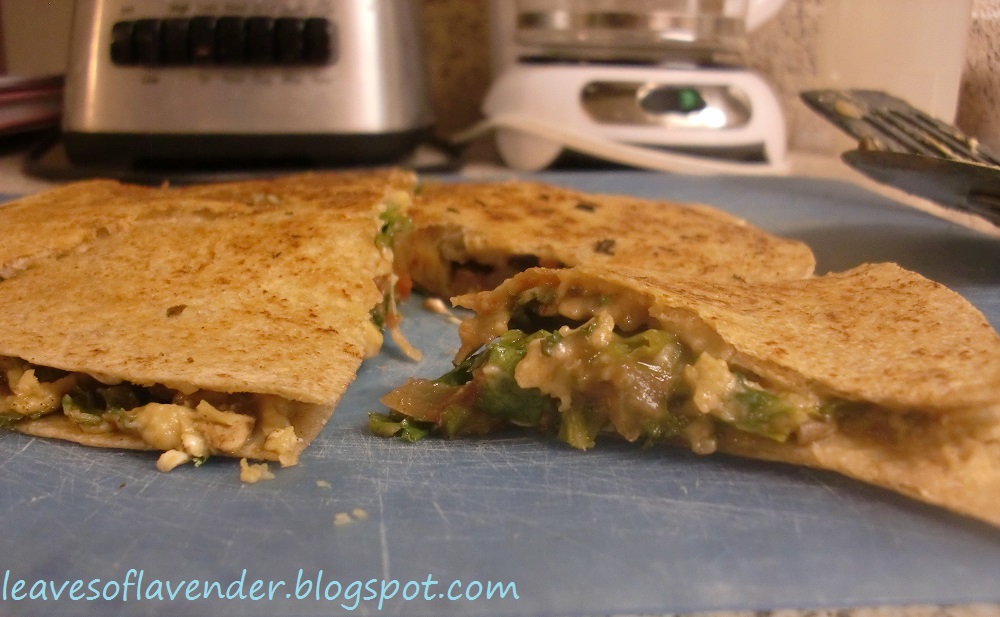
I have indeed added this mix to chili, and I've also used it as the base ingredient for fajita sauce. I can basically see it as a good stand-in for taco seasoning in any context; I imagine it'd be awesome mixed into bean dip or used to season whatever you put into your tacos (I, personally, will always love chickpea tacos, and I bet this would be an amazing way to flavor those beans!). I've also used it on the vegan quesadilla-type things that I often make for lunch, which consist of tortillas, hummus, beans, salsa, and whatever veggies I happen to have on hand.


My entire family seemed to love this blend in every way I experimented with it. I'm looking forward to trying out a few new ways in the coming weeks and months!

Seafood Splash is described as "a sweet/savory spice with just a bit of kick," and is recommended for using with (not surprisingly) various types of seafood. I don't eat seafood, but I didn't let that stop me! I used this blend in a pot of homemade vegetable broth, and I whisked it into a marinade for baked tofu.

Perhaps my favorite way of using this blend (so far, anyway!) is as part of my filling for wraps: mashed chickpeas + (vegan) mayonnaise (hummus would work too) + yellow mustard + a generous dash of Seafood Splash makes a great wrap filling; just add a copious amount of veggies and a whole grain tortilla for a delicious meal.

Last of the blends I tried is Rice Spice. Made of sea salt, garlic, and a whole bunch of other yummy spices, this blend pairs perfectly with grains of all kinds. It's worth experimenting with to find your own perfect proportion of spice to rice (I liked more than the package suggested). Aside from rice, which was quite tasty with this cooked in, Rice Spice also worked great with quinoa and couscous.

I would love to eventually try to turn this blend into some kind of delicious salad dressing. I also think it could make for an amazing risotto, with carrots and some kind of leafy green mixed in. I'm always open to other suggestions, too!


If you're into cooking, I heartily recommend giving some of these seasoning blends a try. I feel like I've barely scratched the surface of their potential, and I am looking forward to continuing to experiment with them. Hopefully some other fun, new recipes are in my future, thanks to these delicious blends from Fat Free With Me!

Note: I received free samples of these spice blends from Fat Free With Me in exchange for an honest review. All opinions expressed in this post are entirely my own!

Wednesday, June 10, 2015

How the Hironimus Case Has Evolved My Views on Circumcision

I had no opinion on circumcision prior to becoming a mother.

When I was pregnant with my son, the topic naturally came up as one of the "decisions" new parents must make if they have a boy. It didn't take me long to decide against it. Why would I cut off a perfectly healthy, perfectly normal part of my son's body? We had no medical reason to circumcise, so we chose not to. End of story.

I learned a lot more about circumcision in the months and years after we made our choice. And everything I read--every fact I heard about the very useful function of the foreskin (it's so much more than a "flap of skin"), every video I watched (no, I was never able to actually watch a video of the procedure all the way through, but videos are available on YouTube if you'd like to give it a try), every horror story of hemorrhage and complications and repeat surgery and death--EVERYTHING made me more and more thankful that I had chosen to leave my son's perfect body intact.

My decision was not one that I really talked much about. My closest mom-friends knew, and some of my family knew (because they helped change diapers). But otherwise, the topic just never really came up in conversations. Circumcision can be such a controversial topic that it's often avoided. I didn't want anyone to think I was judging them if they chose differently from me. (And, for the record, I generally assumed that most of the parents I knew have circumcised their sons. Even though rates are steadily declining in the U.S., it is so culturally accepted that it seemed safest to assume that "everyone is doing it." I have a lot of friends with kids, and I didn't want to offend anyone.)

Here's where I will rattle off the tried-and-true list of reasons why NOT to circumcise. Like how one of the primary reasons why circumcision became so common in our country was to try to limit masturbation, which is, of course, a stupid reason to cut off useful bodily tissue. Or how studies of circumcision reducing HIV in Africa (in adult men, who consented to the procedure themselves) were flawed and should not be applied to routine infant circumcision in the U.S. (heck, even our military recognizes that circumcision does not prevent STIs). Or how circumcision does not actually reduce the rate of urinary tract infections in boys by any significant amount (lifetime risk goes down by about 0.02%). How about the fact that the New Testament in the Bible actually forbids routine circumcision? Or that babies do, in fact, feel pain the same way that adults do (a lot of people try to claim that the procedure hurts an infant less than it does an adult), and that less than 50% of doctors who perform circumcisions actually use any kind of anesthesia for pain relief? Circumcision can negatively impact breastfeeding. And the idea that a father and son (or brothers) should "match" is just downright ridiculous.

How about this reason? It's his body, and it should be his choice. If a man decides to become circumcised later, that's his decision, but perhaps it's not one we should be making for our kids in the absence of actual medical need. That idea is often referred to as genital integrity.

Yet despite all of these very solid reasons to not do what many deem unnecessary cosmetic surgery (rightfully, in my opinion), I still hardly ever talk about it. I can think of precisely two women who I have broached the subject with (and thankfully, both of them were already planning on going all natural with their sons, so I didn't have to try to convince them otherwise).

But the more I hear and read about the Hironimus case in Florida, the harder and harder it is to stay silent.

Since I imagine you haven't been reading all the same things that I've been reading, here's a quick rundown.

Heather Hironimus and Dennis Nebus have a baby whom they name Chase. They are not married. At some point, the two of them sign a parenting agreement, which includes a clause about circumcision: Hironimus will consent so long as Nebus arranges for the surgery and pays for it.

Now for two important facts. One: Hironimus didn't really know anything about circumcision at the time. Two: Nebus didn't bother to do anything about circumcising their son for more than two years; clearly, it wasn't a huge priority for him.

Meanwhile, Hironimus learns more about circumcision and becomes quietly opposed to it. Mysteriously, Nebus is suddenly eager to have their son circumcised. Hironimus refuses to honor the original agreement. It turns into a big messy court case that spans more than two years.

Flash forward to now. With the assistance of a judge that many feel has disregarded the best interests of the boy, Nebus ultimately wins the case. By now, Chase is nearly four and a half years old. He knows what circumcision means and has repeatedly expressed that he does not want it. Hironimus is threatened with jail time until she consents. She goes into hiding, with her son, at a domestic violence shelter, but is ultimately found and jailed. At first, she holds strong, but the threat of indefinite jail time eventually breaks her; handcuffed and sobbing, Hironimus signs the consent forms.

Coercion DOES NOT equal consent.

And now, rumor has it that Chase is on the brink of receiving this unnecessary surgery. There is no medical reason, he does not want it, and his mother has not truly consented. But all the same, it might still happen.

And this case has really made me rethink my rationale of why I am against routine circumcision. See, before, all of those medical and physical reasons were the top reasons why I was opposed. There's no real benefits! It's painful! It makes sex less pleasurable for adults! An intact boy is super easy to care for!

The more I think about this issue, the more I realize how important the concept of genital integrity really is. What right do we have to make a decision like this for our children? Chase's case is so controversial in part because he's old enough to have his own opinion, and to express that opinion; does that mean that circumcision is somehow more okay when the baby is too young to say no? Most people in our country are very vehemently against the act of female circumcision, but male circumcision is similar in many ways (less so physically and but more so culturally, for the cultures where it is more common); female circumcision is actually illegal in the U.S., but male circumcision is not. It's not my body, it's my son's body; what right do I have to decide that a completely necessary part should be cut off for no good reason?

And the more I think about it, the more I realize that this is an issue that we really do need to talk about more. For so many people, the issue of circumcision comes down to a vague paragraph or two in a pregnancy or baby care book, but it is so much more complex than that.

And at the same time, it is so much more simple.

Without an actual medical reason, and those are surprisingly few and far between, baby boys should not be circumcised. Period. The surgery can always be done later, but it can never truly be undone.

His body, his choice.

It's time that people start thinking, really thinking, about this decision before they make it. I've been big on informed decision making for a long time now, and that's a major issue here too. Parents deserve to truly know the facts about circumcision before deciding whether or not to do it. It's time to start talking more openly about circumcision.